Picking the Right Parts for Your Mercedes-Benz Without Guesswork
A practical guide to choosing OEM, OES, and aftermarket parts for Mercedes-Benz, with tips on VIN checks, part numbers, and common pitfalls.
Every Mercedes-Benz carries a 17-character VIN that tells you far more than the model year. Before ordering anything — brake pads, a control arm, a headlight assembly — pull the VIN and cross-check it against the part's fitment data. Two W205 C-Class sedans built six months apart can use different suspension components depending on the options box ticked at the factory.
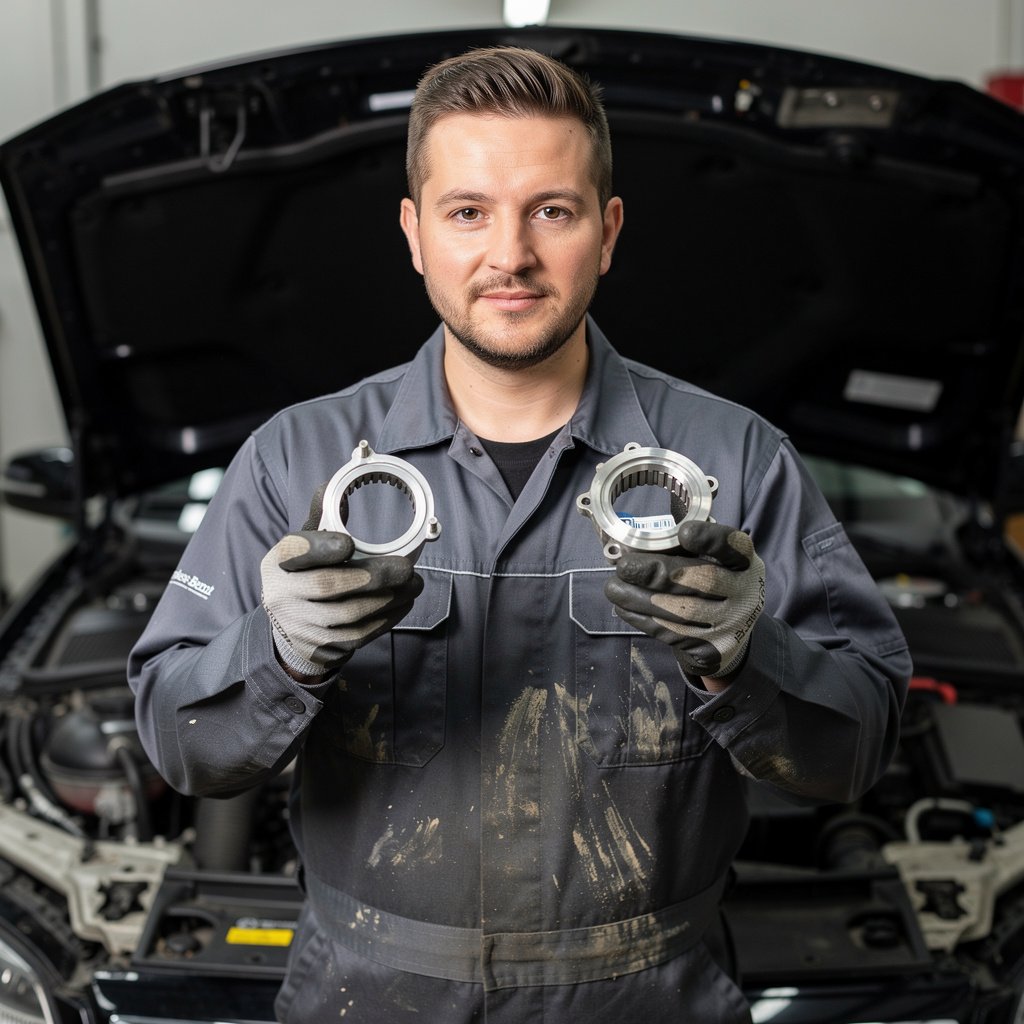
Start With the Part Number, Not the Description
A listing that says "front brake pads for C300" is not enough information to buy with confidence. Mercedes-Benz assigns a unique part number to nearly every component, usually a 10-to-11-digit sequence like A 000 420 03 20.
You can find these numbers stamped on the old part itself, printed on the box if you still have it, or pulled from the dealer's parts lookup using your VIN. Once you have the exact number, matching a replacement becomes a simple comparison instead of a guessing game.
Some parts also carry a suffix that indicates a revision. A control arm ending in "64" might have replaced an earlier "63" version after an engineering update. Always check whether a superseded number applies to your car before assuming the part in front of you is current.
OEM, OES, and Aftermarket: What the Labels Actually Mean
OEM (Original Equipment Manufacturer) parts come from the same factory that supplied Mercedes-Benz during production, but sold without the three-pointed star packaging. OES (Original Equipment Supplier) is functionally identical — same manufacturer, sometimes even the same box design, just marketed under the supplier's own brand.
Genuine Mercedes-Benz parts are the same components sold through the dealer network at retail markup, often 20-40% higher than buying the OEM version directly from a supplier like Bosch, Sachs, or Febi.
Aftermarket parts are made by third-party companies with no direct link to the original supplier. Quality varies enormously here — a Brembo brake rotor can outperform the factory part, while a no-name rotor from an unfamiliar brand might warp within 10,000 miles.
For safety-critical systems — brakes, steering, suspension bushings — sticking with OEM or OES from established suppliers saves you from returning to the shop twice. For cosmetic trim, interior clips, or non-structural covers, aftermarket options often work fine and cost half as much.
Know Which Parts Are Model-Specific
Mercedes-Benz shares platforms across model lines, but that doesn't mean parts interchange freely. A W213 E-Class and a W205 C-Class from the same generation can look similar under the hood yet use different alternator brackets, sensor housings, or wiring harness connectors.
Engine codes matter as much as chassis codes. The M274 four-cylinder turbo appeared in C-Class, E-Class, and GLC models with slightly different calibrations and, in some cases, different oil filter housings depending on production year.
Before buying anything tied to the engine bay, confirm both the chassis code (found on the VIN plate) and the engine code (stamped on the block, usually near the front). A part that fits an M274 in a 2015 C300 might not bolt onto the same engine code in a 2017 GLC300 if a mid-cycle revision changed the mounting points.
Where Fitment Data Goes Wrong
Most fitment errors happen when buyers rely on year-make-model filters instead of VIN-specific data. Online parts catalogs group vehicles broadly, and a filter set for "2016 E-Class" might include three different engine options with three different air filter housings.
Suspension and brake parts are especially prone to mismatches because Mercedes-Benz offers multiple suspension packages — standard steel springs, AIRMATIC air suspension, and sport-tuned setups — often on the same model year. A control arm bushing rated for the standard suspension won't necessarily handle the geometry of an AIRMATIC-equipped car.
When in doubt, call a dealer parts department and read them your VIN. Dealers have access to the full build sheet and can confirm exact part numbers even if you don't plan to buy from them.
Checking Quality Before You Install
Once a part arrives, a quick visual inspection catches most problems before they become expensive mistakes. Compare weight, casting marks, and connector shapes against the original if you still have it on hand.
For electrical components — sensors, modules, actuators — check that the connector pin count and shape match exactly. A sensor that looks identical but has a different pinout can damage wiring or trigger fault codes that take hours to diagnose.
Rubber and plastic components should smell fresh, not like they've sat in a warehouse for a decade. Brittle bushings or cracked seals on a "new" part are a sign of poor storage or old stock, and they'll fail faster than a properly stored replacement.