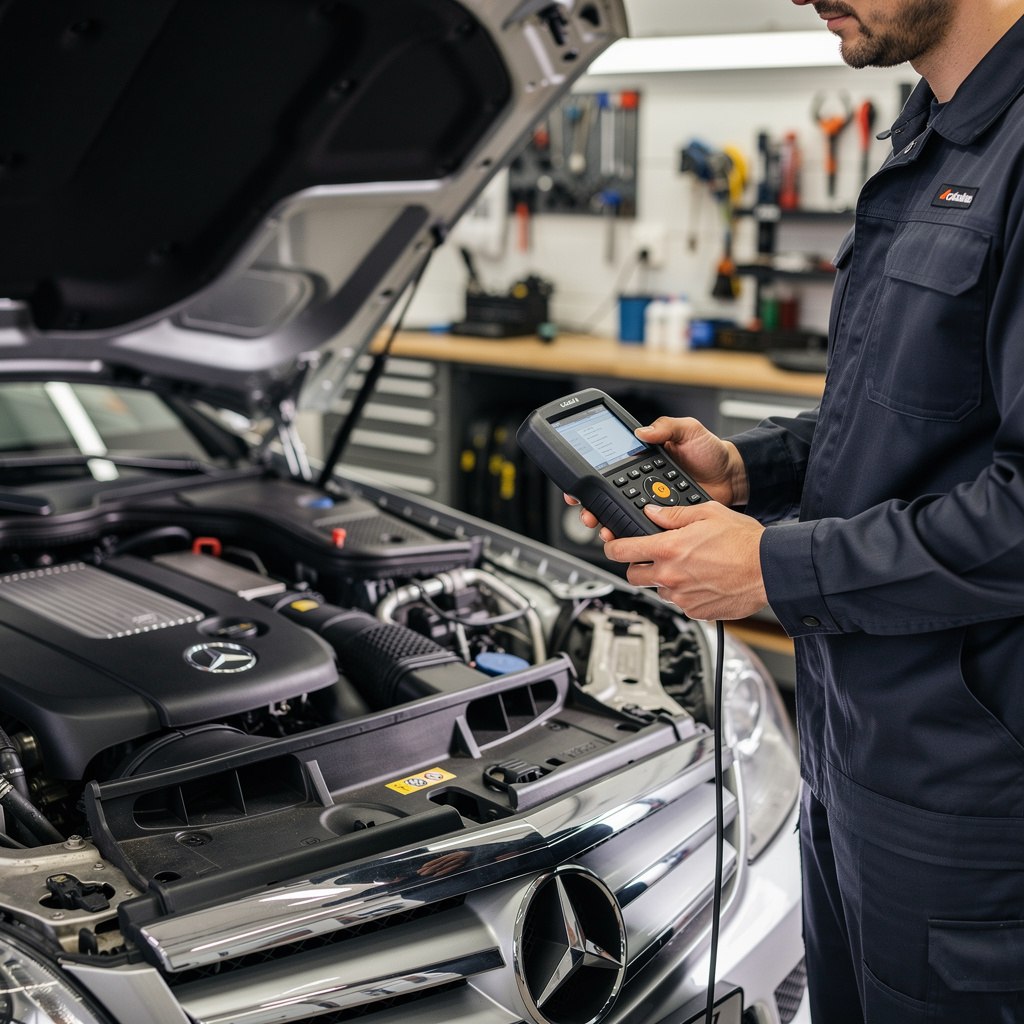
How Independent Auto Repair Shops Rival Dealership Service
A look at how independent auto repair shops match dealership quality through equipment, training, pricing, and online visibility.
Ten years ago, taking a Mercedes-Benz to a corner garage instead of the dealership felt like a gamble. Today, that gap has narrowed so much that many owners can't tell the difference in the quality of work, only in the price on the invoice.
The Diagnostic Equipment Gap Has Closed
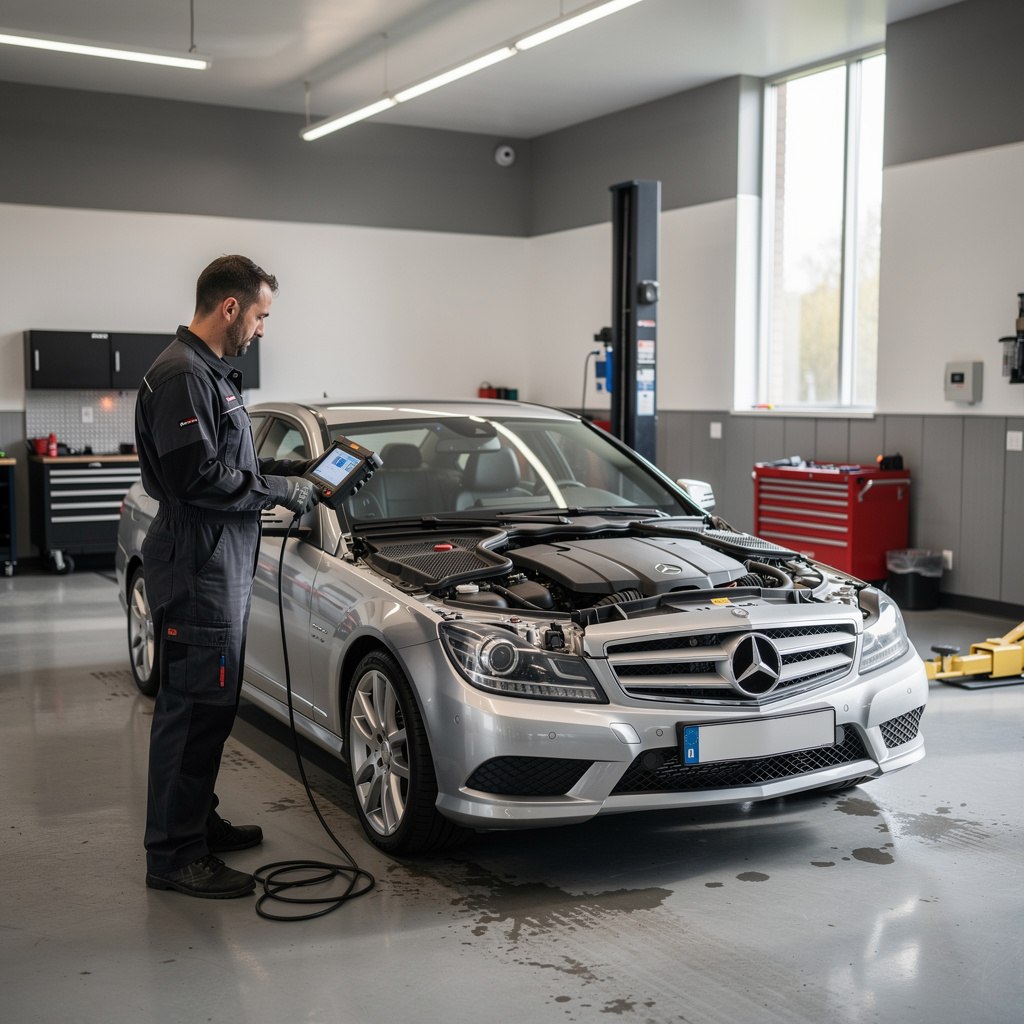
Dealership advantage used to come down to proprietary scan tools. That's changed as companies like Autel and Launch now sell Mercedes-capable diagnostic units for $2,500 to $7,000, a fraction of what dealer-only systems cost a decade ago.
A well-equipped independent shop can read the same fault codes, run the same adaptive resets, and reprogram modules after a battery replacement. The remaining gap is mostly software update frequency, not hardware capability.
Technicians Don't Need a Dealer Badge to Be Qualified
ASE certification, plus manufacturer-specific training available through aftermarket programs, lets independent techs specialize without working under a dealer roof. Many shops employ mechanics who spent five or ten years at a Mercedes dealership before going independent.
That matters because complex jobs, like timing chain replacement on an M276 engine or air suspension diagnostics, depend on hands-on experience more than brand affiliation. A shop with two techs who each have a decade of German-car experience often outperforms a dealership floor with high staff turnover.
Pricing Transparency Builds Long-Term Trust
Dealership labor rates for Mercedes work commonly run $180 to $220 an hour in major US markets. Independent specialists typically charge $110 to $160, and many post their labor rates and common job estimates directly on their websites.
That openness changes the customer relationship. Instead of waiting for a service advisor to call with a number, owners can compare a quoted brake job or fluid service against a published range before booking an appointment.
Getting Found Matters as Much as Getting It Right
Being the best shop in town does nothing if nobody finds it online. Independent garages compete against dealership marketing budgets that often include full-time digital teams, so a shop with three employees has to be strategic about where it spends time and money.
Most start with a complete Google Business Profile, consistent NAP data across directories, and a steady stream of customer reviews after every job. Beyond that, building domain authority through backlinks is what separates a shop that ranks on page one from one buried under national chains. Because earning links one at a time through guest posts and local partnerships is slow, some shop owners choose to buy seo links online to build authority faster while they focus on running the business instead of chasing outreach emails.
The risk is picking low-quality link sources that search engines eventually discount or penalize. Shops that treat this as one part of a broader plan, alongside real content and genuine local citations, tend to see steadier ranking gains than those looking for a single shortcut.
Parts Sourcing Is Where the Real Difference Shows
The biggest operational gap between dealers and independents isn't the wrench work, it's the parts counter. Dealers stock OEM parts directly and can usually get same-day availability for common jobs.
Independent shops rely on distributors and sometimes wait a day or two for less common Mercedes-specific components, though many now stock high-turnover parts like brake pads and filters in-house. For anyone comparing a quote, it's worth asking directly whether the shop is installing OEM, OE-equivalent, or aftermarket parts, since that answer affects both price and long-term reliability more than almost any other factor in the estimate.
A shop that answers that question clearly, without hedging, is usually the one worth trusting with the next service appointment.