Check Engine Light On? Here's What Your Car Is Actually Saying
A practical guide to reading OBD-II codes, spotting common triggers, and deciding whether to grab a scanner or head to the shop.
That little orange engine icon on your dashboard rarely means what people assume. It's not a countdown to disaster — it's a message from your car's computer that something fell outside expected range. Learning to read that message takes ten minutes and saves a lot of guesswork.
Why the Light Comes On At All
Every car built after 1996 in the US carries an OBD-II system — a network of sensors constantly checking fuel mixture, oxygen levels, engine temperature, and dozens of other values. When one sensor reports a number outside its programmed range, the computer logs a code and lights up the dashboard icon.
The trigger can be serious, like a failing catalytic converter, or trivial, like a gas cap that wasn't tightened after your last fill-up. The light itself doesn't tell you which — the code behind it does.
Reading the Code: A Quick Cheat Sheet
Every OBD-II code follows the same five-character format: a letter, then four digits. The letter tells you the system — P for powertrain, B for body, C for chassis, U for network. Most check engine codes start with P.
The first digit after the letter matters too. A 0 means the code is a generic standard shared across all manufacturers; a 1 means it's specific to your car's brand. The remaining three digits point to the exact fault area — 300s usually mean misfires, 400s point to emissions, 100s relate to fuel and air metering.
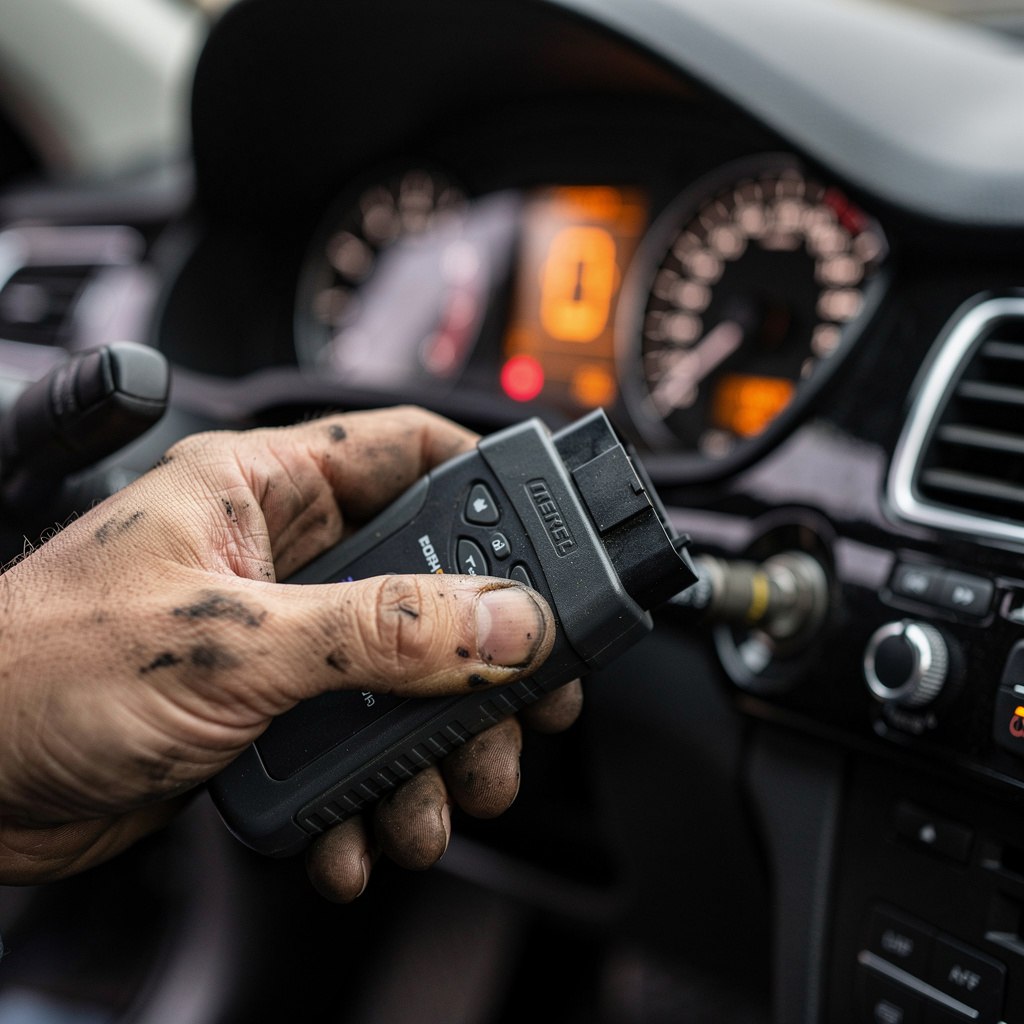
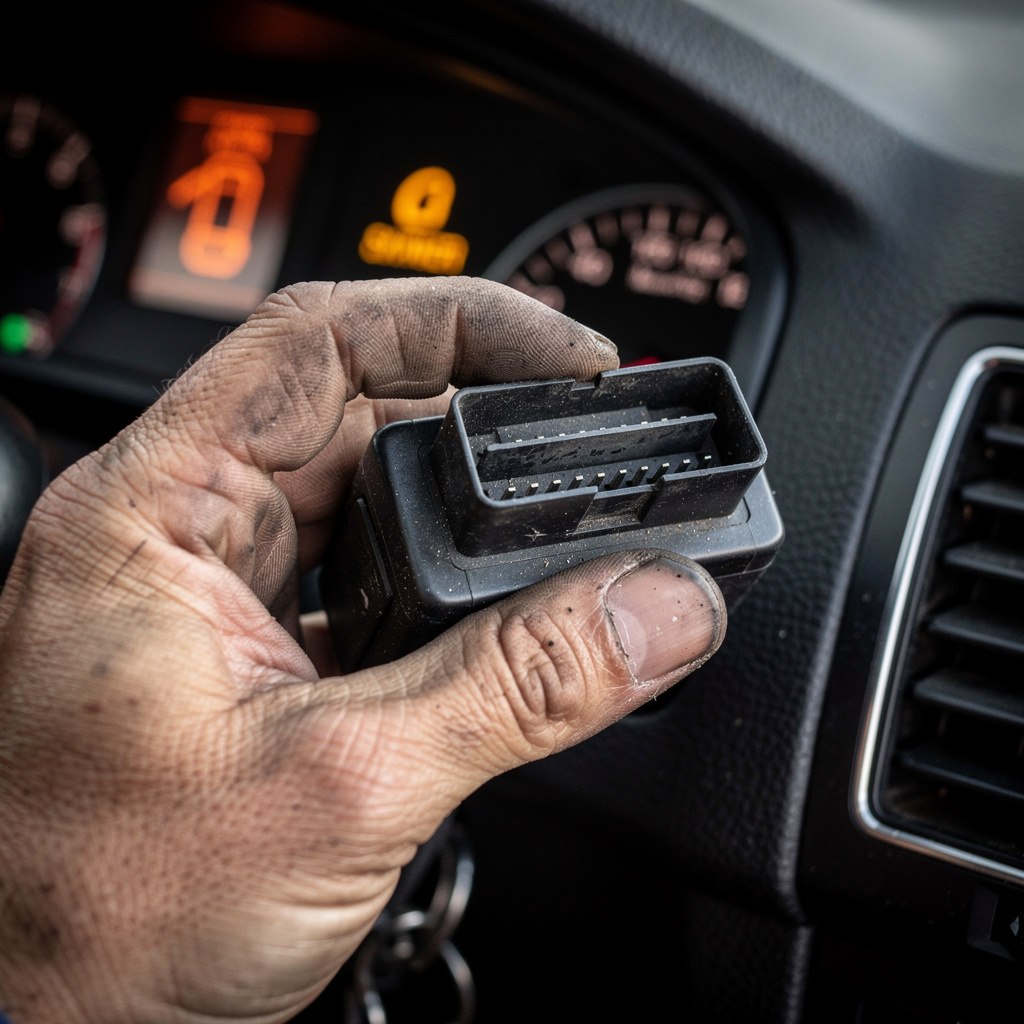
A basic Bluetooth OBD-II scanner costs $20 to $60 and pairs with a free phone app. Shops use professional-grade tools running $500 and up, which read manufacturer-specific codes a cheap scanner might miss.
Common Codes and What They Usually Mean
P0171 and P0174 mean the engine is running lean — too much air, not enough fuel. Often it's a cracked intake hose or a dirty mass airflow sensor, not something that needs immediate towing.
P0300 through P0308 point to misfires, sometimes in a specific cylinder. Worn spark plugs or a failing ignition coil are the usual suspects, and driving on a misfire for weeks can damage the catalytic converter.
P0420 signals a catalytic converter operating below efficiency threshold. This one's worth taking seriously — converters aren't cheap to replace, and the cause is often an upstream issue like a bad oxygen sensor rather than the converter itself.
P0455 and similar codes usually mean a loose or missing gas cap, or a crack somewhere in the evaporative emissions system. Tighten the cap, drive for a day, and see if the light resets before assuming the worst.
Scan Tool or Shop Visit?
If the light is steady and the car drives normally, you have time. Buy or borrow a scanner, pull the code, and look it up before deciding your next move. Many auto parts stores will read the code for free if you don't own a scanner.
A flashing check engine light is different — it usually means an active misfire that's dumping unburned fuel into the exhaust system, which can overheat and destroy a catalytic converter within minutes of driving. Pull over, turn off the engine, and get the car towed rather than driven.
For anything involving fuel trim, oxygen sensors, or repeated codes after a reset, an independent shop with a professional scan tool will save time. They can watch live sensor data while the engine runs, not just a stored code from an hour ago.
Don't Ignore a Steady Light — or a Flashing One
Clearing a code without fixing the underlying issue just delays the problem — most will come back within a few drive cycles. The computer re-tests the same system every time you start the car and reports again if the fault is still there.
Treat the check engine light as a starting point, not a diagnosis. Pull the code, match it to the system it points to, and decide from there whether it's a five-dollar gas cap or a job for a lift and a diagnostic tech.