Mercedes-Benz Engine Trouble: What to Watch For Before It Gets Expensive
A practical breakdown of the engine issues that show up most often on Mercedes-Benz models and the early signs that give them away.
Mercedes-Benz engines are built to run past 200,000 miles without major surgery, but that doesn't mean they're immune to trouble. Certain problems show up so often across the lineup — from the W204 C-Class to the W211 E-Class — that mechanics can often guess the model just from the symptoms. Knowing what these issues look like early can save you from a five-figure repair bill.
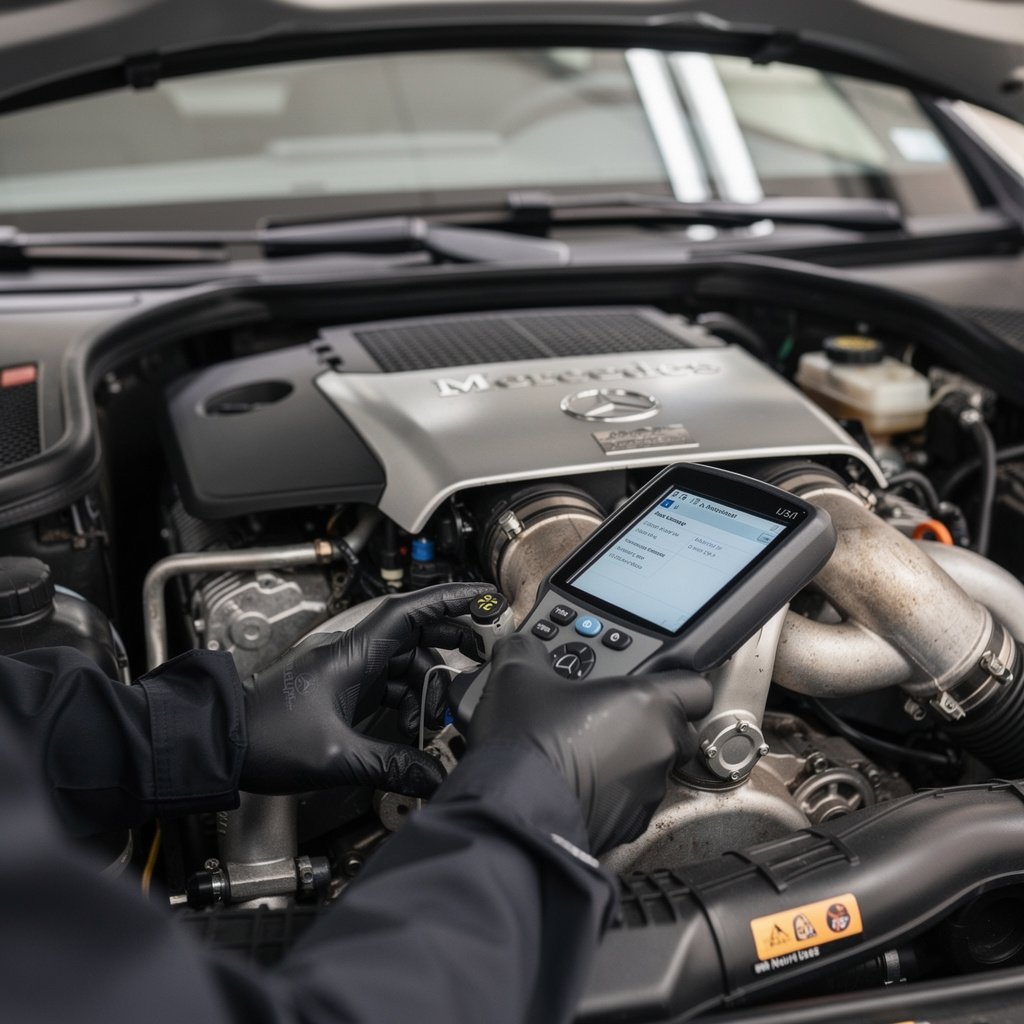
Balance Shaft Gear Failure on M272 V6 Engines
The M272 3.5L V6, used in many C, E, and CLK models from roughly 2005 to 2011, has a well-documented weak spot: a plastic balance shaft gear that wears down over time. When it fails, timing chain tension gets thrown off, and the engine can run rough or throw codes for misfires on multiple cylinders.
Early signs include a rattling noise on cold start that fades after a few seconds, a check engine light with codes related to camshaft position, and a slight loss of power under acceleration. If you catch it early, the gear can sometimes be replaced before it strips completely. Wait too long, and metal debris from the failed gear can circulate through the oil system, causing damage well beyond the timing components.
Oil Leaks from the Rear Main Seal and Valve Cover Gaskets
Older inline-six and V8 engines, including the M112 and M113 series, are known for gasket and seal degradation as the rubber ages. A slow oil leak from the valve cover often shows up as a faint burning smell, especially after highway driving when the engine bay gets hot.
Check for oil residue around the base of the valve cover and along the bell housing where the transmission meets the engine — that's usually where a failing rear main seal leaves its mark. A few drops on the garage floor might seem minor, but ignored leaks lower oil levels gradually, and low oil pressure accelerates wear on bearings and the timing chain.
Timing Chain Guide and Tensioner Wear
Many Mercedes-Benz four-cylinder and V6 engines, particularly the M271 and M272 families, use timing chain guides made from a plastic composite. Over 100,000 miles, these guides can crack or wear thin, letting the chain slap against the engine block.
A metallic rattling sound right after startup, which gets quieter as the engine warms up and oil pressure builds, is the classic symptom. If you hear this and put off inspection, the chain can eventually skip a tooth on the timing gear, which throws off valve timing and can lead to bent valves in some engine configurations. This isn't a repair to postpone — a timing chain inspection typically costs far less than the damage it prevents.
Intake Manifold Swirl Flap Failure
Diesel engines like the OM646 and OM651, along with some gasoline four-cylinders, use swirl flaps inside the intake manifold to improve combustion efficiency at low RPM. These small flaps are prone to breaking off, and when they do, the broken piece can get pulled into the cylinder.
Watch for a rough idle, reduced power at low RPM, and a check engine light with codes pointing to intake manifold or throttle body irregularities. A scraping or rattling noise from the intake side of the engine, especially noticeable when idling in neutral, is another red flag. Many owners choose to have the swirl flaps removed and the manifold modified once one flap fails, since replacement parts often have the same design flaw.
Coolant Leaks from Plastic Components
Mercedes-Benz engines from the late 1990s through the 2010s use plastic and composite parts extensively in the cooling system — expansion tanks, thermostat housings, and coolant pipes included. These parts become brittle with heat cycling and often crack years before the rest of the engine shows wear.
A sweet smell inside the cabin, a coolant level that drops every few weeks without a visible puddle, or white residue crusted around hose connections are all signs worth investigating. Because these leaks are gradual, many drivers only notice a problem when the temperature gauge spikes on the highway. Replacing the expansion tank or thermostat housing preventatively, especially past 80,000 miles, is far cheaper than dealing with an overheated engine.
Reading the Signs Before They Become Repairs
Most of these problems announce themselves quietly — a new sound at startup, a faint smell, a slightly rougher idle. None of them require expensive diagnostic equipment to notice, just attention during the first few minutes after starting the engine each day.
Keeping a simple log of unusual noises or smells, along with mileage when they first appear, makes it easier to describe symptoms accurately to a mechanic. That kind of detail often shortens diagnostic time and points straight to the right repair instead of a round of guesswork.