Pre-Road-Trip Car Checklist: What to Inspect Before You Drive
A practical pre-road-trip checklist covering fluids, tires, brakes, and last-minute errands before a long drive.
A long drive exposes weak points in a car faster than daily commuting ever will. Heat, extra weight from luggage, and hours of continuous running can turn a minor issue into a roadside breakdown. Spending thirty minutes on inspection before you leave saves hours of waiting for a tow truck later.
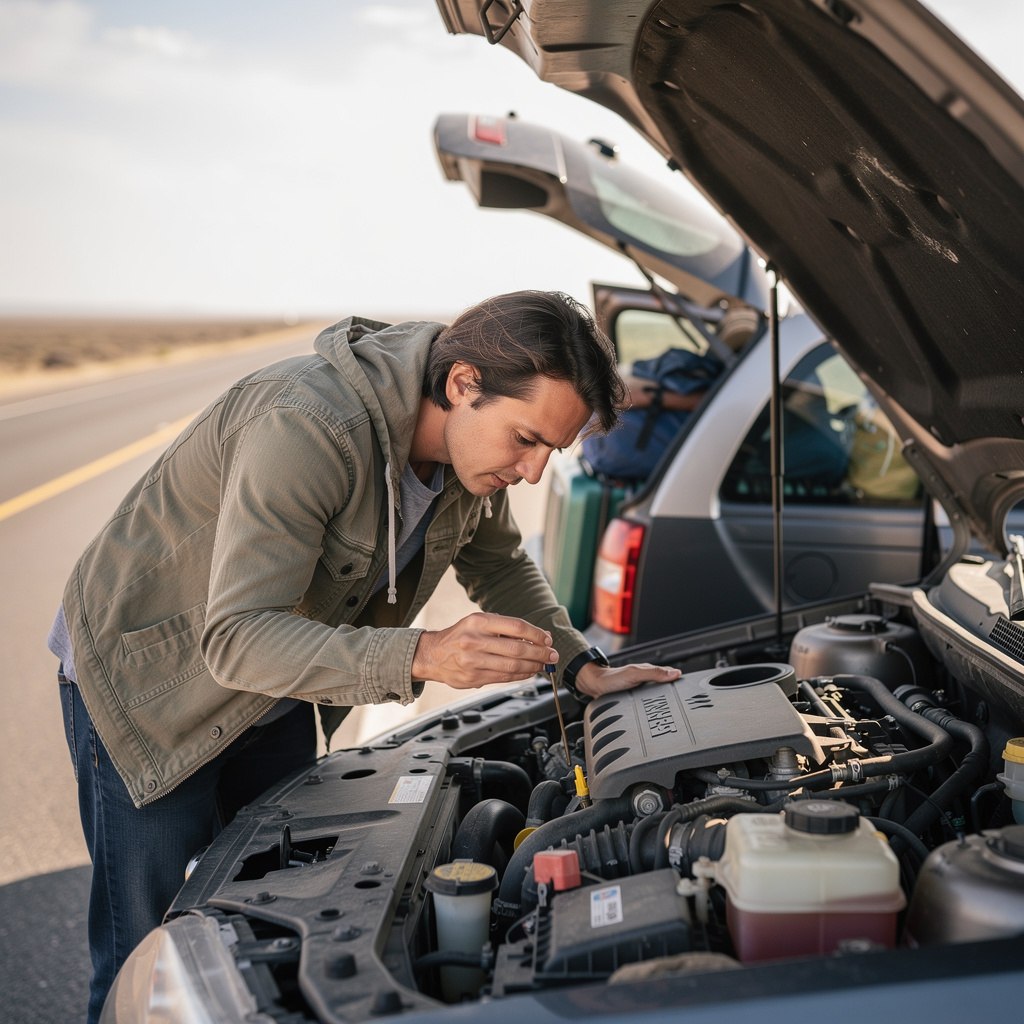
Check Fluids and Tire Pressure First
Pull the dipstick and check oil level and color; dark, gritty oil means it's overdue for a change. Look at coolant in the reservoir when the engine is cold, and top off washer fluid while you're at it.
Tire pressure matters more on trips because a fully loaded car needs slightly higher PSI than daily driving. Check the number on the door jamb sticker, not the one printed on the tire sidewall, and don't forget the spare.
Worn tread is another common cause of trip trouble. Run a coin test on each tire — if you can see too much of Lincoln's head on a penny pressed into the groove, plan for new tires before you go.
Inspect Belts, Hoses, and Battery Terminals
Open the hood and look for cracks or fraying on the serpentine belt. A belt that snaps on the highway can kill your power steering and alternator at the same time.
Squeeze the radiator hoses gently — they should feel firm, not soft or brittle. A hose that bursts in hot weather will leave you stranded with an overheated engine.
Check battery terminals for corrosion, that white or bluish buildup that looks like crusted powder. A loose or corroded connection can leave you with a car that won't start at a rest stop.
Test Lights, Wipers, and Brakes
Walk around the car with the headlights, brake lights, and turn signals on, and ask someone to confirm they're working. A burned-out bulb is a cheap fix at home but an expensive ticket on an unfamiliar highway.
Replace wiper blades if they streak or chatter across the glass — they're inexpensive and take five minutes to swap. Sudden rain on a trip is not the time to discover yours are shot.
Listen for grinding or squealing when you brake, and note if the pedal feels soft or sinks lower than usual. Brakes are not something to gamble on during a trip with unfamiliar mountain roads or heavy traffic.
Pack an Emergency Kit and Run Errands Before You Leave
A basic kit should include jumper cables, a flashlight, a first-aid box, a tire gauge, and a small tool set. Add a phone charger that plugs into the car, since a dead phone during a breakdown makes everything harder.
This is also the time to knock out last-minute errands so you're not stopping every twenty minutes once you're on the road. Fill prescriptions, grab snacks for the cooler, and buy milk or other perishables if you're bringing along coffee or cereal for early morning stops.
Keep a paper map or offline navigation download as backup — cell service disappears in plenty of rural stretches, and a dead phone shouldn't mean a lost driver.
Plan Your Route and Fuel Stops
Map out fuel stops in advance, especially if part of the drive goes through areas with long gaps between gas stations. Running low on a two-lane highway with no signal is a bad way to test your patience.
Check for construction or weather alerts along the route the night before you leave, not the morning of. A ten-minute search can reroute you around hours of delay.
Build in rest breaks every two to three hours, both for the driver and for the car. An engine that runs nonstop in summer heat benefits from a cooldown period just as much as the person behind the wheel.